

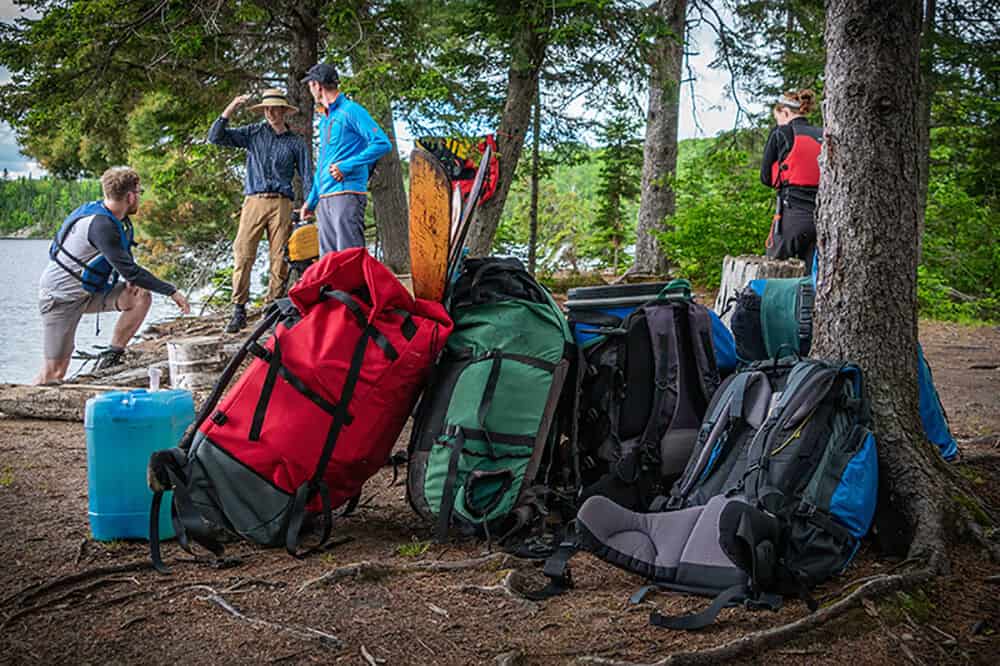
How big do you want your Algonquin canoe trip to be? This August, we’re running a week-long trip into the northwest corner, a week of whitewater on the Petawawa River, and the full thirteen-day expedition crossing that links them both. One route across the park, with three options to match whichever size fits your calendar and your appetite for adventure.
There’s a clean-water route that crosses Algonquin Park north. It’s the natural waterway across “the park”, carved by glacial melt ten thousand years ago. The big lakes of North Tea, Manitou and Kioshkokwi are examples of the Western Uplands. Mix in some smaller lakes and a meandering river, and that’s our first seven days. Then it’s into the fast water of the Petawawa River, which takes us from Brent to the eastern boundary. This August we are paddling it. All of it.
7-Day “Best of the Northwest” — Aug 21–27, 2026 — $1,836+HST 7-Day Petawawa Whitewater — Aug 26–Sept 2, 2026 — $2,638+HST 13-Day Crossing Algonquin — Aug 21–Sept 2, 2026 — $4,841+HST
Here’s the part most people don’t realize until they look closely: these aren’t three unrelated trips. The two 7-day trips are the front half and back half of the 13-day crossing, run back to back, on the same water, in the same window. Pick one week, or paddle the whole thing.
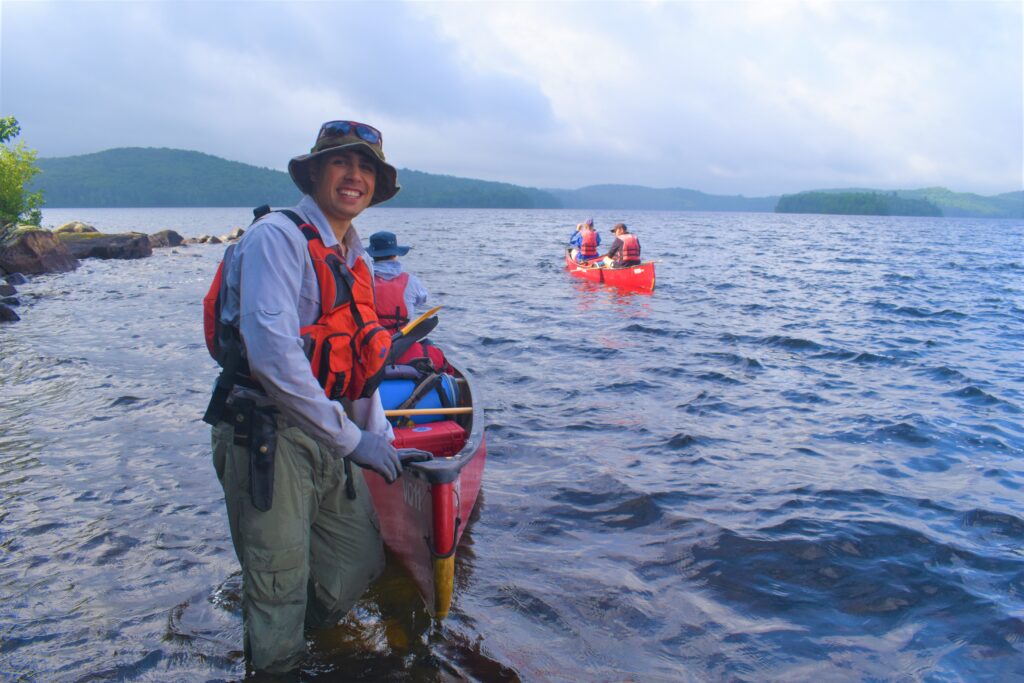
Week One: Flatwater — “Best of the Northwest”
This is Algonquin at its most unhurried. From Access Point #1 on Kawawaymog Lake, we paddle north across the top of the park — big lakes, meandering rivers, campsites on points where the wind keeps the bugs away. This is trout water. Set your line in the evening, and there’s a real chance dinner comes out of the lake. Moose wade in the shallows at dawn. Loons call across the water at night. The pace is relaxed — active for up to five hours a day, no experience required — and the group stays small, six paddlers at most.
By day seven, you’ve reached Cedar Lake and the old town of Brent. For the 7-day trippers, this is where the trip ends, and the shuttle back to Access Point #1 begins. For the 13-day Expedition, we switch boats and practise a few whitewater strokes.
Week Two: Whitewater — The Petawawa River
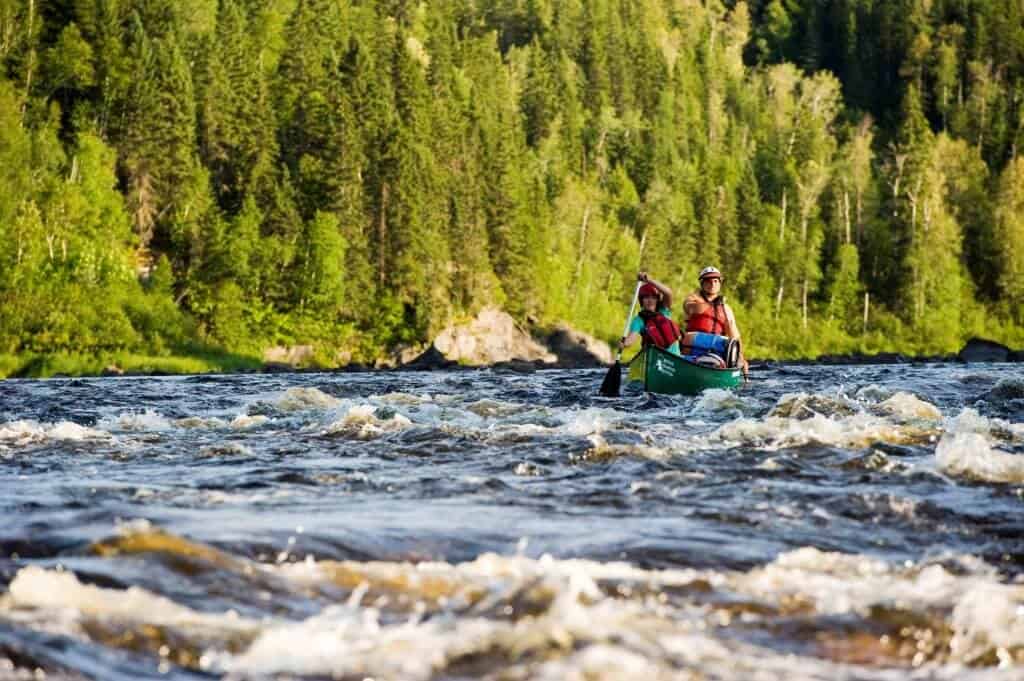
The Petawawa is an Algonquin First Nation word, roughly translated as “where one hears the sound of water” — and once you’re on it, you understand why. From Brent, the route picks up speed. Class II and III rapids carry you east through some of the most dramatic wilderness in Ontario, with whitewater instruction built into the days for paddlers who are ready to learn a new skill. This week calls for a bit more comfort in a canoe — six hours of activity a day rather than four — and it rewards that experience with a completely different kind of Algonquin: faster, louder, more physical.
The trip ends at McManus Lake with a farewell lunch, a shuttle to Ottawa and the bus back to Toronto
The Full Crossing of Algonquin Park
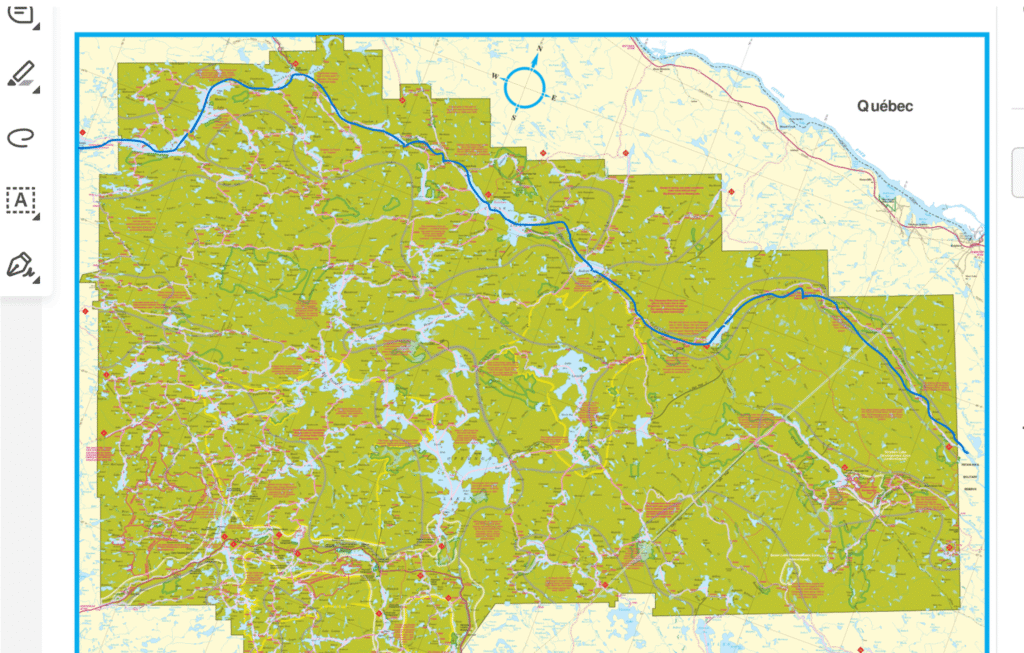
For many of us paddlers who love Algonquin, this trip is on our list of “must-do” trips. The mix of paddling terrain is world-class. The backcountry campsites stunning. Add to that wildlife and good fishing. One Epic expedition. Paddling Algonquin Park end to end — thirteen days, twelve nights, one continuous line from the western boundary to the eastern edge. It’s the trip our guests talk about finishing “next year” and the one that gets circled for milestone birthdays and long-planned reunions. The first week teaches you to read a lake. The second week teaches you to read a river. By the end, you’ve done both.
So Which One Is Right for You?
Choose the 7-Day Best of the Northwest if: you want a true wilderness canoe trip without whitewater, you’re new to multi-day canoe tripping, or you have a week rather than two.
Choose the 7-Day Petawawa Whitewater if: you’ve got some canoe experience already, you want to learn moving-water skills, or you’re drawn to a faster, louder kind of adventure.
Choose the 13-Day Crossing if: you finally made the time for the epic trip— the stillness and the speed— and you’re ready for the kind of trip that changes how two weeks can feel.
“The way of the canoe is the way of the wilderness “
However you choose to paddle it, you’re tracing one continuous route across the park — the line on the map above shows the whole thing, from Access Point #1 to the eastern edge. And once you’re out there, the days get simple again: paddle, portage, camp, repeat. Sigurd Olson, who guided these same north woods for thirty years, spent a career writing about exactly that — that “joys come from simple and natural things,” that “the way of a canoe is the way of the wilderness,” and that “simplicity in all things is the secret of the wilderness.” Put together, his point was really one idea: simplicity isn’t a hardship you put up with out here. It’s the freedom you came for. However big you make the trip, that’s what you’re actually signing up for — not a bigger to-do list, but a shorter one.
Read what that rhythm actually feels like from one of our own trips through the northwest corner
Book the 7-Day Best of the Northwest · Book the 7-Day Petawawa Whitewater · Book the 13-Day Crossing Algonquin
FAQ
Is the 13-day trip too much for a first-time canoe tripper? The 13-day Crossing Algonquin does recommend some prior canoe or wilderness experience, largely because of the whitewater in week two. First-timers are better suited to the 7-day Best of the Northwest, which requires no canoe trip experience. Some camping experience is recommended.
Can I do just the whitewater week without the flatwater week? Yes — the 7-Day Petawawa Whitewater trip runs Aug 26–Sept 2 and starts at Cedar Lake/Brent, so you join partway along the same route without paddling the first week.
What’s the difference in physical demand between the two weeks? Week one (flatwater) asks for comfort being active at a walking pace for up to five hours a day. Week two (whitewater) asks for up to six hours, with moving-water paddling skills built in as you go.